Greenbelt ’09: Day 4

So far, I haven’t had much luck with getting to see any of the talks or workshops (with the exception of the one I hosted, of course), so my aim for today was to see at least two.

My first one was Robert Beckford’s Live Aid vs. Dead Aid session in the Centaur. A very thought-provoking presentation in which Robert compared and contrasted two opposing views on aid to Africa. On one hand, you had Dambisa Moyo – author of the book Dead Aid, who argues that all aid corrupts, and that hardcore capitalism is the real solution for Africa (because we all know the credit crunch is just a blip, right? Sorry). Then there’s Bono, putting the case forward for humanitarian help and for the aid that is given to be targeted better and with more transparency to weed out any corruption. Robert himself seemed to be looking for a third option, drawing on the strengths of both sides, rather than be polarised. A very interesting talk – that is, once I’d got over the fact that he’d cut his dreadlocks off…

My second session with the Apples was titled Tracing the History of Funk. This time round, I just introduced the band (after an impromptu jam) and they took it from there. Four band members, including Ofer (one of the DJs) and the drummer, who did most of the talking. Starting with pre-slavery West Africa, he took a sample drum rhythm from Ghana and showed how it cropped up in different forms within Salsa, Brazilian Samba and Bossa Nova, New Orleans marching band music, Bebop, Jazz, and finally funk (or to be more precise, James Brown in the late 60s). The audience was full of funk fans aged from 10 to 50-plus, all with a deep love for the music. When the session ended at 3.00pm, the band literally ordered us to go and see the Hypnotic Brass Ensemble, who were just about to start their Mainstage set.

I also managed to see the Women in Music panel discussion, led by Pippa Wragg – another member of Greenbelt’s music group. I even got to make a comment!

The Press Room closed at 6.00pm, and I decided that for my last few reviews, I’d just go and see stuff I wanted to see. That included Foy Vance (who’d played the Big Top earlier in the weekend, but ‘d missed it), Sister Jones and Brian Temba. And Athlete, of course (or what little would be left of their gig by the time my DJ set had finished). The Welcome Wagon seemed promising, too.

Sister Jones had started their set when I arrived at the Performance Café. Got a big hug from Brian, who was due on next. Both sets were brilliant – and then I finally got to meet Steve Campbell (their producer) for the first time, having communicated with him via email for several years.

After Brian’s & Sister Jones’ gig, I headed for the Blue Nun for my go at Djing. The delightful DJ Ayo was on before me, playing some nice House music – so for continuity’s sake, I started my set with a house tune from Ghana – an Afroganic track. Followed that with a jazz groove thing from Spha Bembe, and then with Max de Castro’s tale about a samba dancer’s wardrobe malfunction.

Predictably, there was a mass exodus around 9.25 when Athlete were due to start on mainstage, but I was determined to enjoy my time on the decks. This was also around the time that I noticed the note next to the decks with the venue’s music policy written on it: “Keep it mellow. The Blue Nun is not a banging dance venue!” Oops, too late – by then we’d already done Soca, Kuduro and Samba/D&B! Stuck with mellower stuff for the rest of the set, then caught what was left of both the Athlete and Foy Vance gigs. Caught up with Steve, Brian and the Sister Jones ladies again, and saw them off as they headed home. Then one final Last Orders (at which I did get to see Athlete) before bed.

And that was it – one of my best Greenbelts ever. Still wish I’d seen 100 Philistine Foreskins play, though…

Greenbelt ’09: Day 3

SUNDAY!!!

Seriously beginning to wonder if I’m not overworking myself. This is a festival, after all. A man needs to have a little fun…

During the night, I’d discovered that my tent is on a bit of a slope. Didn’t do anything about it then because I was trying to sleep, but once I got out of bed I re-positioned the airbed/sleeping bag combo so I won’t keep rolling off the thing at night.

IDMC had an early slot in Centaur venue with Christian Aid. I went along to that, then got to hang out some with John Fisher, ClauDieon and the rest of the gang before they had to dash off to the second of three gigs they’ve got on today (not to mention a ferry ride to France afterwards – and I thought I was overdoing it!).

Having alternated between “Yeah, go for it!” and “What have I let myself in for?” nearly every day last week, I did my first presenter’s slot this afternoon, introducing four members of the Apples to a laid-back crowd in the YMCA tent. In half an hour we talked about how the band got together, the cultural scene in Israel and the underground music scene that’s grown off the back of it. A couple of guys in the audience asked some questions, and then the band used the remaining half-hour to play tracks from some CDs they’d brought; recordings by other Israeli underground acts, including a side project of the soundman and one of the DJs, a reggae artist, a couple of other jazz things, and a very Rai-like party tune which went down really well with the audience. “The Israeli underground scene is like a big community,” they said. “We’re all friends, so we support each other.” I love that indie family vibe and camaraderie… and there was a bit more of it on show in the evening when Jahaziel and Karl Nova turned up for their slots on the Mainstage and Underground. Jahaziel played both. I saw all of his Mainstage set and a little bit of his Underground gig (I caught him teaching the audience the ‘Ben’ Yu Knee’ Reggae dance).

I finally caught up with Carl. My DJ slot is in the Blue Nun from 9pm to 10pm tomorrow. Hold on – isn’t that when Athlete are playing?

Greenbelt ’09: Day 2

Today was a very busy, full day – and for the first half of it, I pretty much managed to miss everyone I wanted to see!

I listened to Rob Bell speak for about half an hour, having pulled rank and used my press pass (and Rachel’s Access All Areas pass) to blag my way to the front of the 8 mile-long queue. Sadly, I didn’t get to hear everything Rob said; I had to leave at 11.00am for my first big interview of the day, with Tom Yendall and Ian Parker – two Mouth & Foot painters. I was busy chatting with Ian when I caught sight of an old mate, Dan Cunningham (Dapper Dan to his friends). Dan lives in Stoke, and as Ian had just mentioned to me that he lived in Stoke, I thought I’d introduce the two ‘Stokies’ to each other. Whenever I meet Dan at this festival, we invariably end up in the Beer Tent. This time was no exception…

We arrived at the beer tent just as Beer & Hymns was about to start. It’s pretty much become a Greenbelt tradition, but I’d never actually been to it before. The MC was clearly channelling Al Murray. I was halfway through my pint of cider when my mobile rang. Time to leave again…

In the afternoon, I joined the rest of the guys from Restore (my church) who’d come up for the day to celebrate Asha’s birthday. We had a lovely picnic on the lawn in the arena area. Nice cake… then it was time to get back to work. Had another failed attempt at adding pics to yesterday’s blog. More and more people are having problems with the wi-fi, so at least I now know it’s not just my computer. Anyway, I was needed to do an on-camera interview with Stu G, ahead of his gig in the Performance Café. Turned out to be just Stu on camera, for which I was immensely relieved; I’m not a telly person! We filmed the four-minute interview in one take. I might not be a telly person, but I’m still a pro…

As the evening progressed, I embarked on a ‘see as many gigs as possible’ blitz. I caught the Treehorns, Quench, Royksopp, Stu G covering Kanye West’s ‘Heartless – all with notebook in hand, as I was meant to be reviewing them (thankfully not full reviews – that would’ve been mental). Sadly, I missed Sway and the MPs he was with promoting Platform 2. I also missed Vula – two days, two Basement Jaxx lady singers gigs missed by me (I’d also missed Sharlene Hector’s the night before).

Carl (the guy looking after the DJs) is away at a wedding, so I’m still at a loose end as regards where and when I’ll be doing my DJ set. The Blue Nun wine bar looks cool…

Greenbelt ’09: Day 1

I’m finally here – at one of my most anticipated Greenbelts in my 19-year history of going to the festival. Here with even more hats on than usual. Here for the first time as a volunteer involved in the organising of the festival.

I arrived on site just after 1pm; picked up my volunteer’s wristband, then set about finding a space to pitch my tent. I found a prime location in the Volunteers’ camping area, just behind the Big Top (thankfully, all the gigs in there will be over long before my bedtime!).

Even though I’d packed meticulously in advance, I still managed to leave a couple of non-essentials behind – the worst omission of all being the tracksuit bottoms I was meant to wear to sleep (that place gets seriously cold at night. You want to be wrapped up as much as possible!). I’d also forgotten to bring a pot with me! Still I’ve got cereal for breakfast, and with the food vouchers I get for working here, I probably don’t need to cook! I’ll just donate the cans I brought with me at the end of the weekend…

Having done the volunteer check-in, I went and did all the Press formalities (told you I was wearing more hats than usual). My interview and press conference schedule got off to a good start with Bluetree. Not the quietest interview I’ve ever recorded (it took place backstage just as the festival was about to kick off), but the guys themselves were brilliant. In 40 minutes, they talked about everything from singing worship songs in a Thai brothel (and how that inspired them to start a movement against child sex trafficking), to tattoos (those guys have some of the most decorated arms in rock!), to the quirkiness involved in trying to make it in America (having to re-record their song ‘God of This City’ as ‘God of These Cities’ specifically for Minneapolis & St. Paul) – and a few tips for getting out of talking to your partner on the phone – but we won’t go into those…

Didn’t see too many gigs tonight; spent most of the time catching up with the many friends I’ve made coming here over the years. But I did want to see a little stand-up comedy. Now, in years past, comedy gigs at Greenbelt have always been over-subscribed. The Festival Bowl (Cheltenham Racecourse’s newest venue) seemed large enough to address that problem. Well, that’s what I thought – until I turned up after 8pm to see Andy Kind, and couldn’t get in because… yeah, you guessed it!

Later on, I had a look in the Blue Nun – the wine bar where I’m meant to do a DJ set at some point during the festival. Some young lad who was barely over 11 was playing some vintage 2-Tone stuff – well, mostly The Specials. The atmosphere there seemed pretty laid back, so I reckon some of my stuff will work in there… hold on, they’ve changed to drum n’ bass! Mental!

Sixpence None the Richer closed the first night’s mainstage line-up. They opened with ‘Kiss Me’ – which sparked off a conversation amongst some in the audience as to how they’d finish the set, given that they’d opened with their biggest ever hit. The gig seemed to be a sounding board for their new album, which they’re currently working on and is due in the shops next April. After Sixpence, I caught a bit of Last Orders, then retired to bed – where I had to sleep in my jeans. Still, better to be scruffy than freeze to death…

Baaba Maal: the Man on the Telly

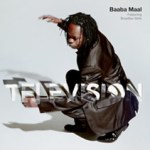
baabamaal_television_211pxTelevision, Baaba Maal’s new album, has had tons of plays since I put it on my iPod a few weeks ago. I got to chat with the Senegalese singer recently (with my Sounds of Africa producer’s hat on), when he was in London performing at the Meltdown music festival. Here’s how the interview went:

Your last album came out eight years ago. Why has it taken you this long to record a follow-up?

Baaba: I had a lot of things to do back in Africa. One of them is to put on a festival called ‘the Blues of the River’. It really took a lot of my time putting it on. It’s a festival which belongs to the community I come from, and I wanted people to discover them and their culture; to show what they have to offer the world. There are a lot of musicians there; they’d like to do things but haven’t had the opportunities I’ve had.

The festival was also a platform to support my work with the UNDP; to talk about the Millennium Development Goals. It’s a music festival, but at the same time we use the days to let people who do lectures visit exhibitions, and we get together to discuss education and other issues. It was a very important festival.

At the same time, I was doing other things. I worked on a few productions that were released in Africa. Also, I was taking my time with this album. I knew that after Missing U, which was made in a very acoustic and simple way, I had to come out with something different. I didn’t want to rush it.

So tell us about Television, then; what about the telly intrigues you so much that you’ve made it the focus of your new album?

It’s all connected with new forms of communication. When you go back to Africa, you see people using television a lot. It’s not just something you sit down to watch in your front room. It’s very fascinating in Africa – especially for young people.

Since we have this fascination, I discussed it with the people I worked with in writing the album. I wanted to explore the kind of effect television has. What role can it play in the mind of a young kid from Africa? And how can this instrument be used to educate people, since we no longer have that place in the middle of the village where people go to get information. And how do governments – or individuals – who own TV channels use them to educate and influence people?

Sometimes I feel very happy, because in Senegal – the country I know most – when I see people watching TV, waiting for a programme in their native language; they see their dancing, their clothes, their culture, and they see people discussing all the issues that are important to us. But at the same time, I can see the danger if governments, say, start using television to sway public opinion, or to get people to think a certain way.

Television is a new thing and a fascinating thing for Africa. We should use it to educate people and lift them to a higher level from where they are now. Four years ago, I went to South Africa to participate in the African version of Big Brother. I know people say it’s a silly programme, but for one month, we used it to come to visit the kids in the house, and to talk to them. We talked to them about the Millennium Goals; we talked about education… all sorts of things.

I was a surprise guest for the housemates. I basically said to them, ‘When you go back to your home countries, you’ll be famous. People will want to talk to you. Use those moments to talk to them about education. Tell them how important it is.’ For the two days that I was in the Big Brother House, I saw all the text messages the show received. People were talking about how great it was that we could use the programme to educate and touch a large number of people.

There’s a track on the album titled ‘A Song for Women’. What’s that about?

For the past 10 years or so, when I look at all the elections that have taken place on the African continent, I see much more influential women are becoming. They’ve come together; some have formed parties… they’re just taking that power and bringing it into politics, and into the economy.

African women know that the place of women isn’t just in the house or the kitchen. Yes, it’s still good that someone takes care of the family; families are important in Africa. But at the same time, women are able now to go outside; to raise their voices and say ‘This is what we want’ – whether in politics – and they are sometimes at the front of the line. And we’re seeing the impact of this in politics.

We look around us and we see that women are now very powerful. Sometimes I think we forget that. But I believe that if we give them all the support they need, maybe changes will take place in Africa. I think women are sometimes more concerned about future generations, because they are close to their kids and want the best for them.

My favourite track on the album is ‘Dakar Moon’. What’s that about?

‘Dakar Moon’ has a double meaning. On the one hand, it’s just a love song. When you sit down with someone you love, and you just take the time to look at all that’s around you – especially the moon, or the sky or the ocean or nature… sometimes people forget to focus on these things. We’re all so preoccupied with looking for money or our jobs, we forget about our environment – which is meaning number two. I’m singing about the beauty of the environment. People need to be more connected with the environment and take care of it.

You’ve been in the music business now for 30 years. When you started out, did you ever imagine your career would last this long?

No, I did not [laughs]. I never imagined that I’d maybe some day travel with my voice and my music with Mansour (Seck). We were just musicians everyone knew from our home town. If you grew up there in the north of Senegal, you are a Fulani and you’re on your boat, just doing your fishing, you just sing. It could be just you, or you and some friends; you’d sit down, maybe have a little instrument, and you’d just sing. This was how we became famous – and we didn’t plan anything! It was just our community who said ‘you can entertain us’ and that became our job.

I was doing pretty well in school; I thought maybe one day I’d be a teacher, a lawyer or something else, who would always be playing music for his friends and family. That was my plan, and that was Mansour’s plan. Then we started to travel, to discover and get excited – and learnt about the business of making music. We began to see the opportunity that travelling with this kind of music could offer. But neither of us expected this when we started out.

The last time I saw you on stage, it was up in Liverpool at an Africa Express show, where you were jamming alongside Franz Ferdinand, the Magic Numbers, Hard-Fi, and of course Damon Albarn. A lot’s been said – both positive and negative – about Africa Express. But in your opinion, what good has it done for African music?

That’s a good question! And this was one of the reasons why I didn’t rush the making of the new album. The idea for Africa Express came from the fact that sometimes when people talk about Africa and use music – such as in Live Aid/Live8, for example – you don’t see many Africans taking part. And concerts like that should be used as an opportunity to showcase African musicians. Who knows; maybe if African musicians became famous as a result of being seen on such shows, they’d sell more records, bring more money back home and be able to employ more people and in so doing, fight poverty in some small way.

With Africa Express, the good thing is that musicians who come from different environments come together and just talk music. The fact that the projects take the time to travel back to Africa, meet people there and form links – I think for the business itself, it can bring forth new combinations. Audiences do get tired of the same old thing. People are waiting to see some new, fresh combinations and collaborations; different musicians working together, bringing about fresh new things, create new songs – new bands, even – and give the industry some fresh new material for the public that buys music. That’s often been missing.

I believe Africa Express gave us ideas; things we could do together. Very old musicians and very young ones; people who do hip hop and R&B… they all got together. Tony Allen teamed up with the Hypnotic Brass Ensemble, for example. Here at Meltdown, I’m doing something with Kano and Bashy. They come from a different environment to me. But thanks to Africa Express, we met; we appreciated each other’s work and made plans for things we could do together in the future, be that on stage or in the studio.

As African musicians, we don’t struggle to fit ourselves into what we know from the Western side. We’ve been listening to the West for centuries. Everything from the West came to us, but the West didn’t get everything we were doing. So it’s much easier for me to fit into what Franz Ferdinand do. It’s not difficult for an African musician. And I think that opens doors for African musicians; it opens a window for people to see us and see that we’re not just in so-called ‘World Music’. We are just musicians like any other musicians are. We can play any kind of music because we have those references – sometimes even in our own traditional music.

You work with the UN as an emissary for young people in West Africa. From your dealings with them, what would you say is big on the minds of young Africans today?

I think young people in Africa are more concerned about their leaders; about their parents – about the people who have power to make decisions; to take care of their issues, and their ability to do things.

People seem to forget that these young kids know exactly that they are a part of the world now. They’re not just African children; they are children of the world. Everything is global now.

I think that sometimes our leaders – parents too – don’t take time to sit down with the kids and talk to them, and to try to understand what they want to do with their lives, which is what happens in the West. You see a child going in a certain direction and you help them achieve what they want to achieve. There is a really big gap between the parents and the children, or between the leaders and the new generation. And I think something is there. The energy is there. They might be very poor sometimes, but at the same time, when they wake up in the morning, even with very small menial jobs, they try to achieve something. They run from east to west in the cities and villages; they try many, many things. So at least the energy is there. And I think it would be a waste if we don’t try to harness this energy, and to give them an opportunity to be at the front. Women and young people are the future of Africa.

India: last week’s news

Media junkie that I am, I couldn’t spend ten days in a media-heavy country like India and not sample the local press, telly and radio. Here are a few of the stories that caught my eye while I was out there.

On the day we arrived, the Hindustan Times had a story on its front page which seemed to disprove the old saying that beggars can’t be choosers. “Playing God in caste-crazy Bihar” said the headline to a piece telling how many childless couples in Bihar are demanding to know what caste their potential sperm donors come from. Sad…

The story that dominated the week’s news agenda happened on Wednesday, when Jarnail Singh (a Sikh journalist) threw a shoe at India’s Home Minister during a press conference.

The incident was another chapter in a story that goes back all the way to 1984 when Indira Gandhi’s assassination sparked off anti-Sikh riots which left over 3,000 Sikhs dead. Jagdish Tytler – a former minister and member of India’s Congress Party – had been accused of being involved in those riots, but had been cleared in 2007… and again last week. But this was all too much for Jarnail Singh, who decided on hurling footwear at the Home Minister as an effective means of protest.

Tytler had been running as a candidate in the elections currently taking place in India. But by the end of the week, he’d announced his decision to withdraw from the race. He said he didn’t think he should fight as “a lot of embarrassment has been caused to the (Congress) party.” I’m thinking the Congress top brass figured it was more expedient to lose one troublesome candidate, rather than millions of Sikh voters…

Bollywood shuffle #1. An almighty row is brewing between India’s filmmakers and the owners of the multiplexes that screen their films, over how big a share of the takings the film producers should receive.

The producers asked for 50% of all ticket sales from multiplexes. Predictably, the multiplex owners told them to get lost. The producers responded to that by refusing to release any new films after the 4th of April. And so Bollywood is now locked in its own equivalent of the writers’ strike that hit Hollywood last year. Two top Bollywood stars, Shah Rukh Khan and Aamir Khan, have tried to mediate between the two sides – so far with not much success.

Bollywood shuffle #2. Meanwhile, there’s been a less-than-warm response to a new reality TV show featuring Bollywood actress Rakhi Sawant. Rakhi ka Swayamvar follows Ms. Sawant as she searches for a husband.

As you may guess, this hasn’t gone down too well in a society which still values the institution of marriage very highly. But I have another reason for not liking it. Anyone who’s seen a few Bollywood movies knows that they occasionally “borrow” ideas from Western films, telly shows, etc. (just go to Youtube and type the words “Indian thriller” into the search engine. You’ll soon see what I mean). We know that and accept it as part of the charm of Bollywood. However, you have to be seriously desperate to nick programme ideas from Jodie Marsh!

Real Girl Power. My favourite story of the week appeared in the Hindustan Times on Sunday; the story of Rekha Kalindi. 12-year-old Rekha lives in a small village in West Bengal – a village with the lowest female literacy rate in India. Amongst her tribe, girls traditionally get married at the age of 12. However, when Rekha turned 12 last November, she put her foot down and refused to be hitched – standing firm even when her dad cut off her supply of food, water and soap.

Rekha’s act of rebellion inspired other girls in her village to do the same, and there haven’t been any child marriages there ever since – something the Indian Government had been trying to achieve for years without much success.

According to Rekha, she decided not to get married so young because she wanted to go to school and get an education. Seeing her older sister Jyotsna must have helped too. Jyotsna did get married at 12; by the time she’d turned 15, she’d already lost four babies.

Rekha was in the papers again yesterday. The president of India heard her story and has now invited her over to visit the Rashtrapati Bhawan (the Presidential palace). Not bad for a young bidi-roller…

Sadly, the expression “You go, girl!” hasn’t been translated in my English-to-Hindi phrasebook. Neither have “Gwaan!”, “Respect!”, “Brap brap!”, “Way to go!” or “Booyaka!” So I guess I’ll just have to settle for “Congratulations!” and throw in a “Namaste” for good measure. Here’s to Rekha – proof that it just takes one individual to start a revolution.

Delhi: It’s All About the Boom-boom

Well, I’ve now been in Delhi four days. And I’m pleased to report that I’ve had no tummy problems at all so far – despite the fact that I’ve been deliberately eating the spiciest food on offer in an attempt to shift the cold symptoms that have bugged me since I landed here.

It’s an interesting time to be in India – and especially in Delhi. The country goes to the polls on the 7th of May, so there’s a lot of electioneering going on. Meanwhile, Delhi is preparing to host the Commonwealth games next year, and so huge chunks of the city are under construction. It’s kind of disconcerting when you can see the massive amount of work being done to extend the Delhi Metro, just across from the squalid slum you’re standing in the middle of. That aside, Delhi is a vibrant, lovely place, full of zindagi (life).

On Tuesday, we started painting Asha’s community centre in Zakhira – under the watchful eye of Claire, who works in an art gallery back home. We did a little more painting on Wednesday, but in the morning I had my first up-close look at slum life when five of us visited Zakhira. Ranee (the lady who runs things in the centre) showed five of us round.

One of Ranee’s many jobs is training up CHV’s (community health volunteers) who then pass on their knowledge of hygiene and basic health care on to the slum dwellers. Asha’s achievements here have been amazing. For example, the number of TB sufferers in Zakhira is now just three, as opposed to 35 when they set up shop here. Asha also does a lot of advocacy on behalf of slum dwellers, and on many occasions have prevented them from losing their homes.

On Wednesday afternoon, there was a prayer meeting at the community centre. After it finished, I got to have a go at Indian drumming. I think I handled the drum okay; I was channelling every bhangra track or Bollywood tune I’ve ever heard! In Indian drumming, it’s all about the “Boom-boom”. That’s the base. Boom-boom. A-boom-boom. Boom-boom, taka-taka, boom-boom. Acha!

Well, we’re busy painting the centre’s IT Room today – which means I’ll have to unplug this computer in a minute so we can get to the walls. So I’ll sign off for now – and will most likely be back at some point during our Easter break.

Swaziland: Days 7 & 8

Monday, late-ish: it rained buckets today! Dunno whether someone is trying to get us acclimatised back into life in Blighty, or something…

Yesterday was fun. We drove to Manzini in the morning for a service at Zakes’ church. He used to pastor it until his workload became too big; his son’s now the senior pastor there.  It was a very ‘African’ service (trust me – I know what I mean by that. I just can’t explain it too well). A choir made up of young blind people sang a few songs and talked about their recent trip to the UK – then Zakes told us how the choir had recently survived an accident when their new minibus’s handbrake went kaput, sending them down a hill backwards. Scary stuff…

Zakes introduced the OCC team, jokingly referring to Clement, Tiny and the others as our “interrupters – sorry, I mean interpreters”. When it was our turn to introduce ourselves, I just said, “I’m George and I’m a writer from London and Sierra Leone,” then immediately thought to myself, “That’s a bit vague, innit? Haven’t really said much.” It turned out to be quite enough; after the service, Zakes’ son came up to me and said, “I was really blessed when you said you were a writer. Africa needs more Christian writers! Pray that we get more people like you!” Be careful what you pray for, bro…

I thoroughly enjoyed the afternoon visit to the culture centre, but it made me realise I really need to get a digital camera that’s a bit more responsive than the one I’m currently using. Or at least one that doesn’t have such a long wait time between takes. It would help a lot when taking pictures in fast-moving situations. I did manage to get one or two pictures of the dancers just as they were doing their high kicks – but it was a lot of work getting them.

As for today… well, we started by going to Teen Challenge’s office in Mbabane to meet Kevin Ward (Director of Teen Challenge Swaziland) and Wandile Shongwe (SP’s Partnership Liaison Manager). Kevin’s family owns the hotel we’re currently staying in. But he’d quit the family business years ago when he felt he was meant to be working with street children. That led to him getting to see first hand the damage HIV has done to lives here, as well as the nastier side of life on the streets. He gave us a run-down of his work and hard insights into the issues the country faces (as well as illustrating how some well-meaning Westerners’ attempts to ‘help’ end up doing more harm than good). The Teen Challenge office isn’t that far from our hotel. But some things are universal – stinking Monday morning rush-hour traffic jams being one of them. It took us about an hour to get to the office!

After meeting Kevin, Wandile and the rest of the Teen Challenge staff, we were off to our big meeting for today. Luvumisa is at the southernmost point of Swaziland. It was one of the areas hardest hit by the droughts Swaziland suffered five years ago (which is why I’m convinced that the bucketing rain we had all throughout our time there was God having an ironic joke with us). Again, people with nothing welcomed us and shared what little they had with us. And I finally got to see a crocodile!

Well, this is it. Tomorrow we’re off home the same way we got here: travelling by minibus to SA, and then flying from Johannesburg Airport. I hope we drop by Bethel on the way and have lunch at the Wimpy again…

Here’s a short list of a few random things I’ve learnt as a result of going on this trip:

  1. It’s good to know your culture and where you’re from, and to be proud of it. It’s even better to be big enough to admit when certain aspects of your culture are just plain wrong.
  2. You can never have enough spares when you’re on the road – whether that’s batteries, film for your camera, or tyres for your vehicle. So always carry loads of spares!
  3. “Don’t harsh my mellow.”
  4. We’ll never solve the HIV/Aids problem simply by throwing tons of condoms at it.
  5. The true way to make friends and influence people is to give gifts. Genuinely and lovingly.
  6. No matter how great a king you are, you can’t stop birds from pooing on your statue’s head.

Swaziland: Day 6

Saturday, sometime…

We checked out of Maguga Lodge this morning and headed south to Mbabane, the capital of Swaziland. Tomorrow we’ll be in Manzini, not too far away, where Zakes’ church is situated. For the rest of our stay, we’ll be based at the Emafini Conference Centre, a hotel/conference facility owned by a Christian family who’ve been in the hotel business a long time.

On the way to Mbabane, we passed by Teen Challenge’s Hawane Life Skills Centre and HIV/Aids care facility. Teen Challenge is one of SP’s partners in Swaziland; the centre has a set of homes in which children affected by HIV/Aids live in a ‘normal’ family setup (i.e. in a home with house parents). There’s a clinic and hospital and lots of other stuff.

After visiting the Teen Challenge place, we stopped in Mbabane’s town centre and had a look around two enormous malls facing each other from opposite ends of the street. The new one may have been more flash, but we reckoned the older one had more character.  I bought a few touristy things in the mall; it had a shop called African Fantasy, which sold some interesting stuff. I also located several music shops and bought a few CDs. Couldn’t find a decent Kwaito compilation, though; maybe I wasn’t looking hard enough. But I did find a CD by a South African artist I’d never heard of before with yet another cover of ‘Here I Am to Worship’ on it. I didn’t buy it. I love Tim Hughes to bits, but do we really need another cover of that song? In Africa, of all places??

After the shopping trip and lunch, we visited Swaziland’s national museum and the Memorial to King Sobhuza II. It was interesting seeing King Sobhuza’s cars: a couple of Cadillacs and a Buick. The Caddies looked really dated; thankfully, they weren’t as tastelessly ‘pimped’ as the last Caddy I saw in a museum (Isaac Hayes’ shiny blue, sheepskin-carpeted, golden-rimmed jobbie in the Stax Museum of Soul Music, that was. That car is the reason for the phrase “too bloody much!”).

I have to say I felt a bit sorry for the guard who has to spend hours in the blazing heat guarding the mausoleum the King was laid in state in when he died. He’s not there anymore (buried in the sacred mountain nearby, along with all the other previous Swazi kings), which made standing for hours in the sweltering heat seem even more pointless. It’s a culture thing, I guess…

Swaziland: Day 5

Friday, 6.40 am: Well, we’ve got off to a not-very-good start today: my iPod appears to be (thinks of even more unpleasant words for “screwed”, then settles for) broken. Let’s see how the rest of today pans out, shall we?

The team’s done all its distributions now; today the homestead and project visits start. Hoping more stories come out of this

6.05pm:Well, today seems to have turned out rather well, despite the shaky start. As for the iPod… well, leaving as it was seems to have sorted its problem out (and drained all its battery power in the process). Maybe I should buy a proper iPod charger for journeys like this. At least I’ve got a minidisc machine and 5 hours of salsa for the trip home. Or I might just watch Mamma Mia instead. But enough about that…

Today was harrowing in places, sad in others, yet with odd glimpses of joy and hope occasionally poking through the sadness (tell me I did not just write that!).

The team split into three groups and each spent time in a different homestead. I was with Val and Heather, and for some reason we seemed to get all the homesteads with no man in sight. At the first one, all the husbands were away working as drivers (one as a teacher), and only made one monthly visit back home after they’d earned enough money to keep their families going. At the other, we found an old lady looking after four great-grandchildren whose mothers had all died (no mention of dads there). Only one of her granddaughters was still alive. She grew her own corn and wove mats for a living. It takes three weeks to make one mat, which sells for 40 Rand (about three quid). Heather and I bought a mat each.

On the way to the homesteads this morning, we stopped off at the post office in Pigg’s Peak for stamps and phonecards. A few people came up to us, smiled, greeted us very warmly and thanked us for choosing to visit their country. I’m definitely not in London…